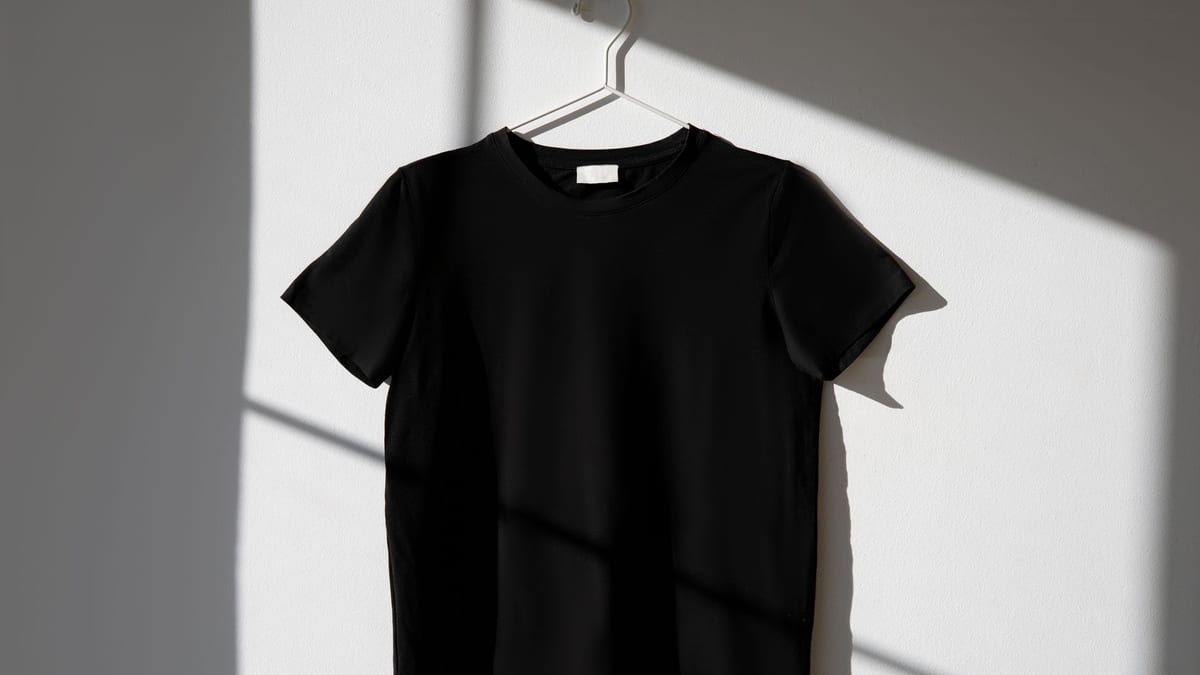
A t-shirt is the only marketing asset that a customer will voluntarily wear in public, repeatedly, for years. That makes it unusually powerful and unusually easy to get wrong, because the same object becomes worthless the moment it feels like an advertisement rather than a garment.
The distinction is not subtle, and it is decided almost entirely by choices made at the factory — which is why choosing the factory is a branding decision as much as a cost one.
Merchandise versus apparel
Merchandise is a blank with a logo on it. It gets worn at the event, then to paint a wall, then thrown away. It costs the least and returns the least.
Apparel is a garment somebody would have bought without the logo. It gets worn to things the brand has nothing to do with. It costs more and it is the only version that does anything for you.
The gap between them is not budget. It is four or five decisions that most people make by default.
The details that do the work
Fit before graphic. People wear clothes that fit and avoid clothes that do not, regardless of what is printed on them. A well-cut 200 GSM tee with a small chest mark outperforms a poorly-cut one with a beautiful full-front print, every time. Get the block right first — and pick a weight that suits the garment rather than the one that sounds most premium.
Restraint on the graphic. The most-worn branded tees carry the smallest marks — a left chest, a sleeve hit, a nape print. Large front logos read as sponsorship. This is counterintuitive to anyone paying for the garment, and it is consistently true.
Neck labels are the whole signal. A customer looks at the inside of the collar when deciding whether something is a real brand. A branded woven or printed neck label costs cents; a blank supplier’s label in your garment tells them, correctly, that they bought somebody else’s shirt with your art on it. This is the single cheapest upgrade available to a small brand.
Colour discipline. Two or three colours you own beat twelve colours you rented from whatever the fabric market had in stock. Consistent colour across seasons is what makes a range look like a range.
Hand feel on the print. A heavy plastisol slab sits on the fabric like a sticker and feels like one. Water-based and discharge inks sink into the fibre, so the print is soft and the shirt still feels like a shirt. On a garment somebody is meant to want to wear, this matters more than print opacity.
Where the identity actually lives
Once the garment is right, identity comes from the parts of it nobody photographs:
- The woven label at the neck, or a printed nape mark if you prefer tagless
- A care label that carries your name rather than the factory’s
- A hang tag with something worth reading on it
- Packaging that is not a generic polybag
- A colour palette that holds from one season to the next
None of these are expensive at production volume. All of them are applied in the factory across the whole range of styles, which means they cost almost nothing extra if specified up front and are impossible to add later without repacking every unit. They also only pay off if the garment itself survives — what fails at the tenth wash undoes any amount of labelling.
The test
Before you commit to a design, ask one question about the garment you are about to make: would somebody buy this if the logo were not on it?
If the answer is yes, you have made apparel, and the branding will travel further than any campaign you could pay for. If the answer is no, you have made merchandise — which is a legitimate thing to make, but you should cost it and expect from it accordingly. If you are asking the question before your first order rather than after it, the order to do things in matters more than the answer.
We produce private label knitwear in Tirupur with woven and printed neck labels, custom care labels, hang tags and retail-ready packaging applied in-factory. Send us your artwork or a reference garment and we will quote it properly.
Keep reading
How to start a clothing brand with custom T-shirts
The practical sequence — validate, cost, sample, then commit — for launching an apparel label on tees without burning your capital on stock nobody ordered.
Clothing manufacturers in India: a buyer's guide to sourcing, MOQs and lead times
What it actually takes to get garments made in India — how to tell a factory from an agent, what minimums and lead times are realistic, and what a private label programme involves.
How to find a clothing manufacturer (without getting burned)
The order of operations that works: define the garment, shortlist factories, verify them, sample, then place a small first order. Written by a factory, including the parts that are not flattering to us.