South African buyers specify by GSM more consistently than buyers in most markets, which is a good habit. It is also the number most easily used to make a quote look cheaper than it is.
This is how to buy by weight without being misled, and how to compare two quotes that are not describing the same garment.
Put a tolerance on the number
Knitted fabric is not produced to an exact weight. It varies with yarn lot, machine tension, humidity and finishing, and a ±5% tolerance is normal and accepted across the industry.
So specify “180 GSM ±5%”, not “180 GSM”. Two reasons:
- It tells the supplier you know how knitting works, which changes the conversation.
- It gives you something to hold them to. Without a stated tolerance, a 165 GSM delivery against a 180 GSM order is an argument. With one, it is a rejection.
A supplier who promises exactly 200 GSM with no tolerance is either inexperienced or not being straight with you. Neither is what you want on a first order.
Ask whether the weight is finished or greige
This one catches people, and it is the most common source of an honest disagreement between buyer and factory.
Fabric weight changes through processing. A greige (unfinished) fabric weighs differently from the same fabric after dyeing, compacting and pre-shrinking. If your supplier quotes one and you measure the other, you both think you are right.
Ask explicitly: is that the finished weight? For a garment specification it should be. Get the answer in writing with the quote, not after the goods land.
GSM is one third of a fabric specification
The number tells you how much fabric is present. It does not tell you how good it is, and two other things decide that:
Yarn. Combed cotton has the short fibres mechanically removed, so it feels smoother and pills far less. Carded does not. A 200 GSM carded tee will feel worse and last less time than a 160 GSM combed one. This is the single biggest lever on how the garment ages, and it is invisible on day one.
Finishing. Compacting and pre-shrinking before cutting decide whether the garment still fits after two washes. Uncompacted fabric shrinks, and no amount of GSM fixes it.
So the specification you send should read closer to: 180 GSM ±5% finished, 100% combed cotton single jersey, 30s yarn count, bio-washed, compacted and pre-shrunk. What GSM measures and what it hides covers why each of those lines is there.
Comparing two quotes properly
The most common way a South African buyer gets a “great price” that turns out not to be:
| Supplier | Quoted | What you compared | What you got |
|---|---|---|---|
| A | 180 GSM combed, compacted | price per piece | the garment you specified |
| B | 160 GSM carded, not compacted | price per piece | a lighter, rougher tee that shrinks |
B is not cheaper. B is a different product. The price gap is the product difference, and comparing the two numbers side by side tells you nothing.
Before comparing anything, normalise:
- Same GSM, with the same tolerance and both finished weights
- Same yarn — combed or carded, same count
- Same finishing — compacted, pre-shrunk, bio-washed or not
- Same construction — side-seamed or tubular, taped shoulder or not
- Same decoration, same number of positions and colours
- Same Incoterm — a FOB price and a DDP price are not comparable
Then compare. Usually the gap has closed to something reasonable, and occasionally it has reversed.
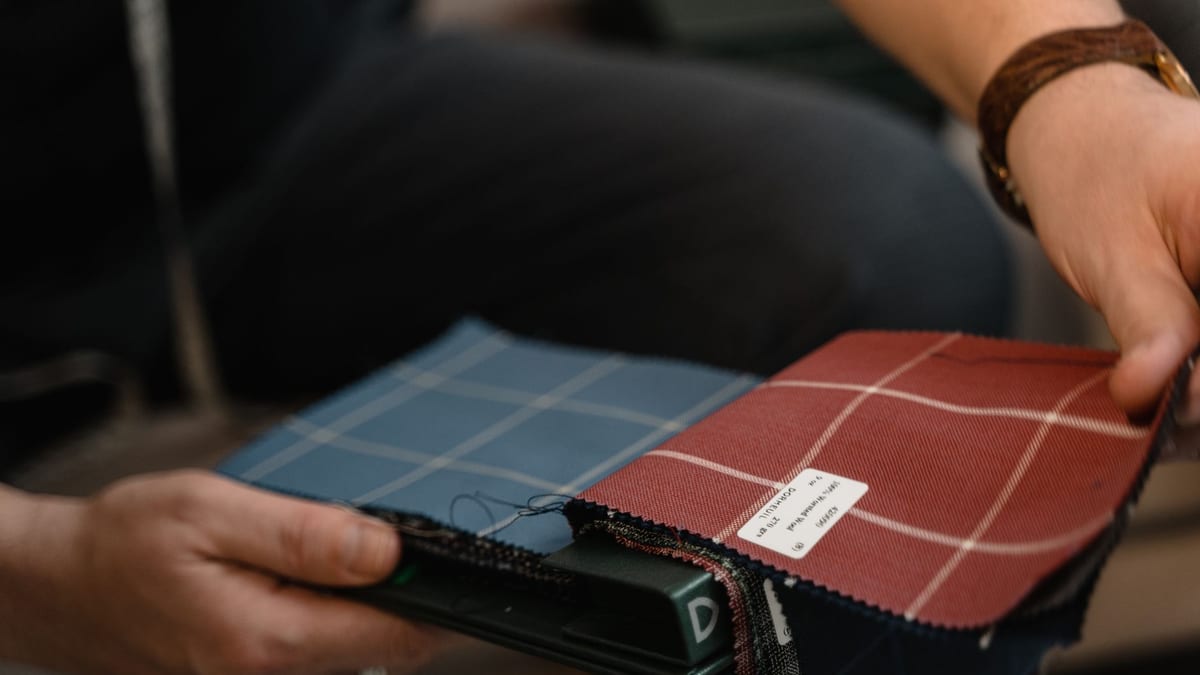
Get a physical swatch before bulk
A weight on an email is not a specification you can enforce. A signed swatch is.
Ask for a fabric swatch at the quoted weight, in the yarn and finish you specified, before the pre-production sample. Keep it. If bulk arrives light or rough, you have a physical reference rather than a disagreement about what “180” meant.
For repeat programmes keep the swatch on file alongside the approved lab dip, because shade and weight are the two things a repeat order quietly loses.
What to actually ask a supplier
Six questions, in the order worth asking them:
- Is the quoted GSM the finished weight, and what tolerance do you work to?
- Combed or carded, and what yarn count?
- Is the fabric compacted and pre-shrunk before cutting?
- Single jersey, pique, interlock — and side-seamed or tubular?
- Can you send a swatch at this spec before we sample?
- If we repeat this order in a year, what do you match it against?
Anyone who answers all six fluently is talking about fabric they had made. Anyone who cannot is quoting a number off somebody else’s price list — which is the difference between a factory and an agent, and worth establishing before the fabric conversation starts.
Two weights, most of the time
In practice most South African orders resolve to 180 or 220 GSM, and which one to pick for which end use is a shorter decision than it looks. The fibre is a separate question again — cotton or poly-cotton for this climate changes how the garment behaves more than 40 grams does.
We knit our own fabric in Tirupur, so the weight, yarn and finish on your spec are decisions we make rather than inherit from whatever the market had that week. We supply South African importers, corporate suppliers and promotional distributors from 300 pieces per style per colour — send us a spec or a reference garment and we will quote against it properly.
Keep reading
How to choose a t-shirt supplier for South Africa
What actually matters when you are importing tees into South Africa: sea leg, GSM for the climate, shade consistency across repeat orders, and the paperwork your clearing agent will want.
What GSM actually means when you're buying T-shirts wholesale
GSM is the number every supplier quotes and most buyers misread. Here is what it tells you, what it hides, and the weight to pick for each kind of garment.
180 GSM or 220 GSM: which weight for the South African market
The two weights most SA orders come down to, and how to choose between them — by end use, by climate, and by what the extra 40 grams costs you in freight.